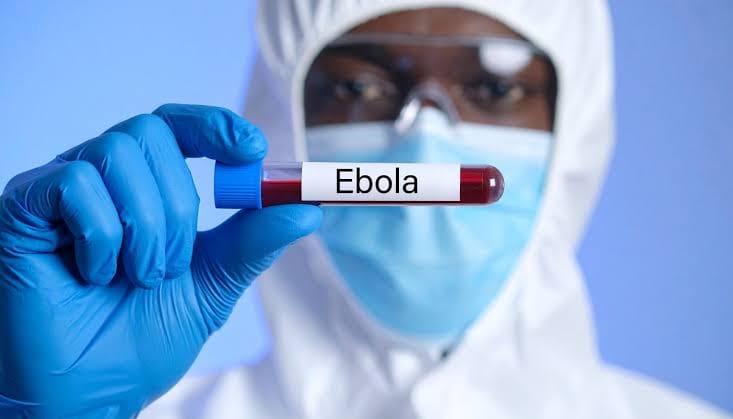
Kenya’s Ministry of Health has confirmed an additional case of the Ebola virus, bringing the total number of confirmed infections in the country to eight.
Director General for Health Dr. Patrick Amoth revealed that out of 38 individuals tested on Sunday, a 49-year-old male patient attendant tested positive for the Bundibugyo strain of the virus.
The newly identified patient developed initial symptoms, including fever, headache, and muscle pain, before testing positive. He has since been transferred to an isolation facility and prepared for compassionate monoclonal antibody therapy.
Health authorities reported that all previously diagnosed patients currently receiving the treatment are responding well. The diagnosis follows four cases confirmed a day prior, which included a close relative of the index patient alongside three healthcare workers who had provided hospital care.
Public health officials reiterated that the likelihood of widespread community transmission remains low. Dr. Amoth explained that individuals under quarantine typically develop symptoms later in the incubation period—around day nine or ten. Because patients are isolated before becoming symptomatic, the risk of transmission within local communities is minimal.
The current outbreak stems from an index patient who arrived in Nairobi on October 3 after traveling from the Democratic Republic of Congo. The individual died on October 5 while undergoing treatment at The Nairobi Hospital.
Dr. Amoth issued a strong warning regarding public skepticism and false information. Drawing comparisons to past outbreaks in the DRC, where denial delayed containment and led to widespread transmission, he emphasized the necessity of strict public compliance.
In contrast, rigorous isolation protocols and early contact tracing allowed neighboring countries like Uganda to quickly control cases and limit overall fatalities.
To manage the health response over the next three to six months, Kenya has implemented an emergency contingency plan estimated at $20 million USD.
International partners, including the World Health Organization (WHO), AMREF Health Africa, and the United States government, are backing the initiative. The U.S. government has contributed $14.5 million USD through implementing organizations to support isolation centers, laboratory testing, and field contact tracing.
Members of the public are advised to remain alert and contact health authorities immediately via official hotlines if symptoms arise.